

Table of Contents
- Harnessing the Power of Blogging to Build a Strong Brand Reputation
- Why Blogs Are Essential for Business Growth and Online Visibility
- Step 1: Define Your Brand's Core Message and Target Audience
- Step 2: Create Educational Content That Showcases Your Expertise
- Step 3: Incorporate SEO Best Practices to Improve Search Rankings
- Step 4: Build Client Trust Through Authentic Storytelling and Social Proof
- Step 5: Establish a Consistent Publishing Cadence to Maintain Reputation
- Step 6: Amplify Your Blog Content Across Social Media and Email Channels
- Step 7: Monitor Brand Health Metrics and Continuously Improve
- Troubleshooting Common Blogging Challenges
- Elevate Your Brand with a Purpose-Driven Blog Strategy
Harnessing the Power of Blogging to Build a Strong Brand Reputation
The reason why blogs are important for brand reputation is that consistent, educational content establishes the trust and authority that turns readers into loyal customers. When businesses publish high-quality articles that address real audience questions, they demonstrate expertise and build lasting credibility over time.
According to industry research, educational content helps improve a brand’s long term trustworthiness. As reported in Search Engine Journal, this is because it supports brands on E-A-T signals, which are signals related to Expertise, Authoritativeness, and Trustworthiness that search engines use to determine how highly ranked a website should be. Content marketing can help brands engage people along the entire buyer journey – from being aware of your brand to advocating for it. One study, as cited by Search Engine Journal, indicates that there was a 131% higher likelihood of customers purchasing if they began the buying journey with some kind of education piece about what it was they were purchasing.
At CloudnBugs we see how well-crafted, SEO-optimized blogs create sustained visibility for our clients, helping them become the go-to resource in their markets. Not only does this improve reputations for a brand, but it will help your business grow in both business and online exposure.
Key Takeaways
- A business blog helps businesses see better in searches.
- Developing a strong, clear brand message and a well-defined target audience is the essential first step in any blog strategy.
- The educational aspect of this site has been another method in which CloudnBugs has demonstrated our web development and digital marketing know-how.
- Real storytelling combined with social proof is what will take the content of our website from being a passive tool to becoming a trust-building conversion engine for our web development agency.
- A regular posting cadence signals to readers and search engines that a site is actively maintained, reinforcing brand reliability.
Why Blogs Are Essential for Business Growth and Online Visibility
A business blog helps businesses see better in searches. It’s also helpful if you want your company to have long term success online. And when people know why blogs are necessary to any business, they might understand more about strategic content that expands organic reach. According to HubSpot, focusing on different search intentions, not only transactional searches, creates indexable web pages that attract valuable informational traffic, and internal linking improves site architecture for search engine crawlers.
Content educates prospects and helps build up enough confidence that potential clients will buy from you rather than your competition. Industry research indicates that if companies provide high quality information, those businesses will attract more customers than businesses that don’t offer this sort of material. Moreover, good blog posts support a site’s E-A-T metrics, which stand for Expertise, Authoritativeness, and Trustworthiness. When customers can find useful stuff online as soon as they start looking around, it’s more likely they’ll end up converting into customers down the road, research shows that people who view educational content at the top of their buying cycle were 131% likelier to make purchases. This sort of content helps create loyalty to your business, but doesn’t force direct sales upon them.
Regularly updating existing posts, a practice HubSpot identifies as historical optimization, yields a high return on investment by maintaining relevance and sustained traffic. To capture these benefits, your blog must start with a well-defined core message and audience. Let’s make something great together.
Step 1: Define Your Brand’s Core Message and Target Audience
Developing a strong, clear brand message and a well-defined target audience is the essential first step in any blog strategy. If your messaging lines up nicely with what your readers values, this will make for content that shows the three T’s of good SEO blogging, Expertise, Authoritativeness, and Trustworthiness, a quality which research says is extremely important.
With this in mind, find something unique within the industry from which you can create authority. Once your audience is defined, tactics like guest blogging and webinars become far more effective at attracting the right prospects. The same goes for webinars, etc.
Start by listing your company’s selling points, then condense all those points down to just one sentence. This could be something like this: Local bakery serves up handcrafted organic pastries to put smiles on family faces every day in Raleigh and Durham.
Having the right message and the target audience already in mind will help produce good educational content that highlights your expertise and push them toward the purchase process.
Step 2: Create Educational Content That Showcases Your Expertise
The educational aspect of this site has been another method in which CloudnBugs has demonstrated our web development and digital marketing know-how. By writing about the latest software technologies, posting tutorials, and releasing guides on how to solve certain issues for your business, we have established a reputation as a credible source of information.
Consumers were found to be 131% more likely to buy if their purchase journey began with educating content, according to that research. Of those who took part in a brand choice test, 83.6% chose the business which provided them with information, and brand trust ratings rose from 64% to 73% just one week later after engaging with it.
We start off by writing niche content for certain industries that we focus on serving: contractors, retail stores, and professional service providers based out of NC. We prioritize including timely industry updates, such as WordPress security patches or Shopify feature releases, to keep our content relevant.
As soon as we’ve got some kind of trust built up with helpful content, the SEO signals these particular pieces make will start helping us find our way in Google, which is necessary if we want to perform the subsequent steps.
Step 3: Incorporate SEO Best Practices to Improve Search Rankings
Now that you’ve created great educational content, what should be your next move? Yes, it’s time to optimize your web page(s) using SEO principles. Because this helps your target audience find it through search engines. And as you probably know already, blogging plays a big role in SEO. In fact, blogs attract visitors early on into the buyers’ journey. If this isn’t clear enough: Target informational search queries with blog content. Additionally, we recommend optimizing titles and meta descriptions. HubSpot’s best practices advise placing target keywords within the first 60 characters of the title tag.
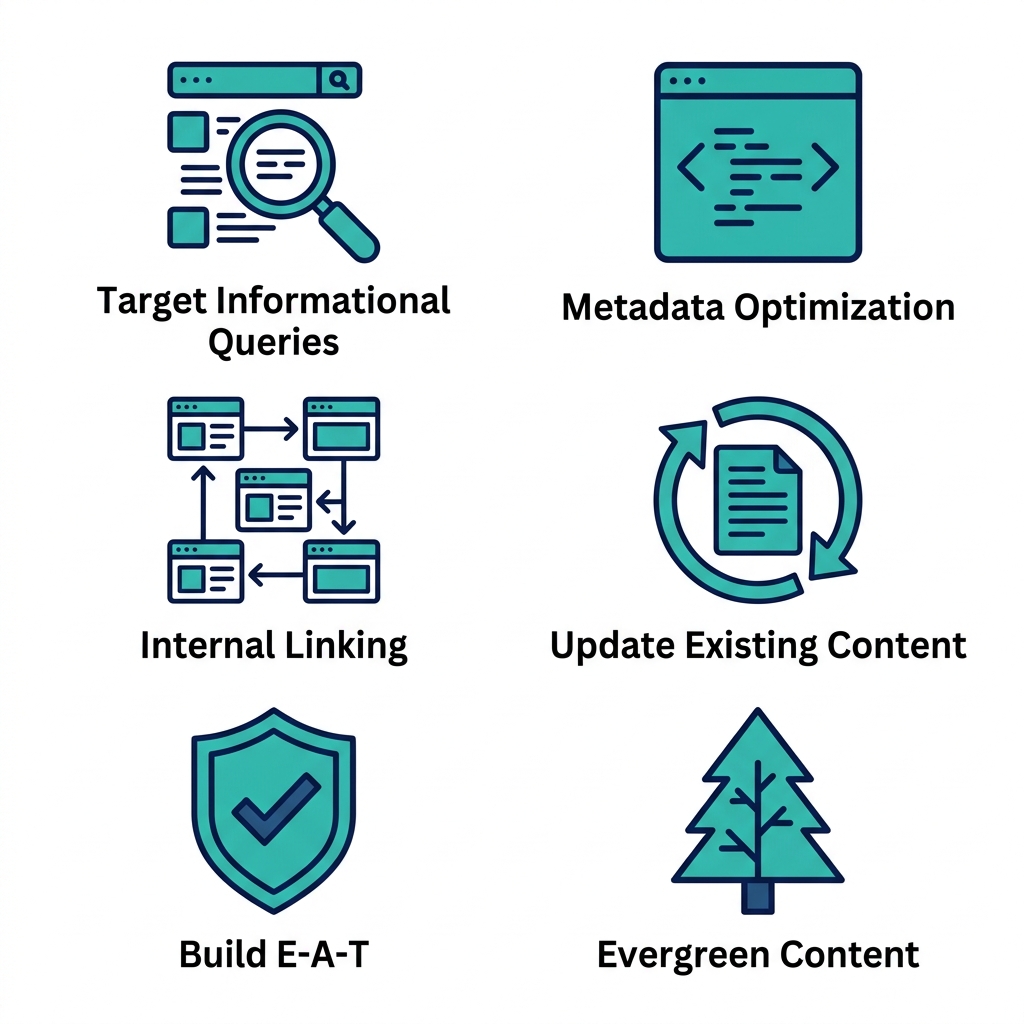
Linking to your blog articles helps crawlers navigate more of your pages and strengthens site architecture, while updating existing high-performing content. Building E-A-T (Expertise, Authoritativeness, Trustworthiness) supports organic performance & reinforces your blog content’s role in brand reputation.
Now that your site has been optimized in the search engines, you’ll be able to get the credibility with potential clients from actual client success stories.
Step 4: Build Client Trust Through Authentic Storytelling and Social Proof
Real storytelling combined with social proof is what will take the content of our website from being a passive tool to becoming a trust-building conversion engine for our web development agency. In order to become a good converter, our content should rank well in search engines but we need to show them why they want to listen to us about their problems.
We use proven tactics:
- Case studies in challenge–solution–outcome format: we recently highlighted how a Raleigh-based e-commerce site’s redesign accelerated orders.
- Educational content guides readers into the sales funnel. research found that 83.6% of consumers choose educational brands, and post-exposure trust rises from 64% to 73%.
- Niche expertise beats broad advice. Our blog dives deep into WooCommerce speed, WordPress security, and Shopify optimization rather than covering generic tech trends.
- Social proof comes from client testimonials embedded in posts and the visibility of our transparent maintenance plans with clearly defined support scopes.
If we can keep this level of trust, doing so depends on a consistent publishing cadence, which we’ll cover in the following phase.
Step 5: Establish a Consistent Publishing Cadence to Maintain Reputation
A regular posting cadence signals to readers and search engines that a site is actively maintained, reinforcing brand reliability. According to HubSpot’s research, search engines reward publishers who report on timely industry updates first, making consistency a key relevance signal. For smaller teams, publishing niche content on a regular schedule proves more effective than covering broad topics—it builds deep, loyal readership. Search Engine Journal notes that high-quality authoritative content attracts valuable inbound links, which search engines treat as credibility votes, and in turn those links improve search performance and strengthen domain authority. Evergreen resources updated periodically provide ongoing value and satisfy E-A-T requirements by demonstrating current expertise. We recommend starting with a sustainable schedule—perhaps one well-researched article per month—rather than overcommitting and going silent. Once a reliable rhythm is in place, content can be amplified through social media and email to extend its impact.
Step 6: Amplify Your Blog Content Across Social Media and Email Channels
If you have a set schedule planned out, the second major thing you need to take care of is pushing this content into all corners of the world via social media and emails. So, what do we do? We amplify our blog throughout LinkedIn, Twitter, and Facebook. On LinkedIn, we post a pull quote linking back to the whole post. On Twitter, we post an idea. On Facebook, we show an engaging image and tease the content. And with this method of posting consistently from different networks, we can get even further than just being in North Carolina. According to Hubspot, content is the means of stretching yourself around the world and building a reputation as an authority. When promoting an email about a blogpost, you’ll want to add some summary and also mention the “read more” link, plus try and personalise your headline. Measure the effectiveness of those amplified efforts using brand health KPIs and continue to tweak them if necessary.
Step 7: Monitor Brand Health Metrics and Continuously Improve
Monitoring brand health metrics is essential to understanding why blogs are important for brand reputation. Brand health extends beyond customer satisfaction to capture perceptions of products, services, and public image, and includes indicators such as Net Promoter Score (NPS) and brand equity. NPS gauges loyalty and likelihood to recommend, while brand equity captures the extra value a recognizable name holds over generic alternatives. Effective measurement pairs these metrics with Share of Voice and branded search trends to assess visibility. Social listening tools such as Awario and Brand24 automate tracking of mentions and sentiment, surfacing spikes or negative signals so teams can act before awareness declines. Feeding those insights into the blog content strategy—adjusting topics, tone, and distribution—creates a continuous improvement loop where each piece aligns with audience sentiment and builds trust. If monitoring uncovers gaps or lingering questions about how blog content influences perception, the troubleshooting guidance ahead offers remedies to improve brand health metrics.
Troubleshooting Common Blogging Challenges
A blog can be running strong at times, then hit snags again down the road. In addition, content fatigue, low organic visibility, and weak domain authority routinely stall content programs.
The following research-backed tactics help us overcome those obstacles:
- Refresh high-performing posts first. Instead of always publishing new content, revisit existing articles that already have some search traction. HubSpot’s blogging research identifies historical optimization as one of the highest-ROI activities—updating data, adding new insights, and improving structure can quickly boost organic visibility and leverages equity you’ve already built.
- Optimize title metadata for click-throughs. Place the target keyword within the first 60 characters of the title tag so it displays fully in search snippets. HubSpot’s industry best practices confirm that clear, keyword-rich titles improve click-through rates from search results pages and make every existing ranking work harder.
- Strengthen internal linking. Strategic internal links reinforce site architecture, guide readers to related posts, and help search engines crawl the site more efficiently. HubSpot’s guidance on blog SEO notes that a well-planned internal link structure supports both user experience and crawl budget, strengthening the overall site’s authority.
- Build E-A-T signals with evergreen content. Publish authoritative, well-researched posts that remain relevant over time and can be refreshed periodically. Industry reporting emphasizes that such content earns inbound links, demonstrates expertise, and establishes the trust signals search engines look for, building lasting authority.
Use these tips as building blocks towards a more driven brand-oriented blog. When your team needs to accelerate that work, our SEO consultation aligns content refreshes, internal linking, and authority-building plans with measurable goals. The key is setting clear, tangible goals.
Elevate Your Brand with a Purpose-Driven Blog Strategy
When common content marketing hurdles are overcome, businesses can focus on a purpose-driven blog strategy that directly strengthens brand reputation. According to industry research, consistently publishing high-quality content that demonstrates expertise, authoritativeness, and trustworthiness (E-A-T) helps attract valuable inbound links, improves search rankings, and supports the entire buyer journey—from awareness to advocacy. Evergreen posts, refreshed periodically, provide long-term value and reduce dependence on paid advertising. We invite you to commit to a long-term content plan that builds authentic trust and drives sustainable growth. That is why blogs are important for brand reputation, they lay the groundwork for lasting authority and audience loyalty. Please note: results may vary; this content is for informational and service-offering purposes and does not constitute legal or financial advice. For data collection and use details, refer to our Privacy Policy.
Schedule Your Blog Strategy Session
You now understand why blogs are important for brand reputation and have a clear, step-by-step framework to implement one – from clarifying your core message to monitoring brand health metrics. Translating that knowledge into consistent, high-quality content that builds E-A-T requires both strategic planning and ongoing technical SEO effort. A personalized consultation provides the precise roadmap you need to move from strategy to execution. We’ll help you adapt the steps to your specific business, ensuring your blog attracts the right audience and strengthens your authority. Our consultation includes a prioritized action plan covering content topics, internal linking, and amplification across social channels. Book a session today and begin building a blog that earns trust and drives long-term growth. Take the first step toward elevating your brand reputation with expert guidance.
Schedule Your Blog Strategy Session